+4D Soundanleitung/en: Unterschied zwischen den Versionen
Uslex (Diskussion | Beiträge) Die Seite wurde neu angelegt: „=== Sound Examples ===“ |
Uslex (Diskussion | Beiträge) Die Seite wurde neu angelegt: „=== New version ===“ |
||
| Zeile 32: | Zeile 32: | ||
=== Sound Examples === | === Sound Examples === | ||
In addition to the PDF description, there are also two sound samples of steam locomotives [[Medium:Klang_Beispiele.zip|sound_ samples.zip]], one without and one with nature sounds. This should make the difference clearer when the locomotive sound is played together with subtle nature sounds. The two-minute sample depicts weather changes during a typical day's run. Perhaps you can recognize what you can hear. | |||
< | <span id="Neue_Version"></span> | ||
=== | === New version === | ||
<div lang="de" dir="ltr" class="mw-content-ltr"> | <div lang="de" dir="ltr" class="mw-content-ltr"> | ||
Version vom 27. Juli 2026, 13:38 Uhr
| Verwendung |

|
+4D sound guide
The Problem
According to forum posts, the +4DSound program is languishing in obscurity, even though many users are surely interested. I suspect that for many model railroaders, getting started with this program is very time-consuming, and most give up after a few hours due to a lack of success. After all, apart from a minimal example, there isn't a single fully prepared locomotive with the corresponding sound files.
What can +4DSound do
Why +4DSound? It allows you to create a spatial sound for your model railway, consisting of stationary sounds and sounds following the train.
Only the combination of a background noise that matches the system
- background noise together with the
- locomotive noises and possibly
- stationary noises creates a realistic sound image.
Locomotive sounds alone often seem too isolated. Ultimately, with +4DSound, a fourth dimension is added to the layout, and the beautiful result justifies the effort.
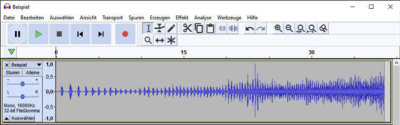
- Fig: 4DSoundExample

In this post our colleague Marek Spalinger has provided us with the very comprehensive instructions 4DSound_guide_V3.pdf.
Sound Examples
In addition to the PDF description, there are also two sound samples of steam locomotives sound_ samples.zip, one without and one with nature sounds. This should make the difference clearer when the locomotive sound is played together with subtle nature sounds. The two-minute sample depicts weather changes during a typical day's run. Perhaps you can recognize what you can hear.
New version
Marek Spalinger hat die Anleitung 2022 in einigen Punkten überarbeitet. Dies betrifft vor allem die Darstellung des Gleisbilds im Stellwerk in Relation zu den Lautsprechern. Und dann gibt es noch ein paar Präzisierungen zu x.1 Soundsystemen und dem Thema Subwoofer.
- neue Version: 4DSound_Anleitung_V3.pdf
Und nun viel Spass mit +4DSound.
Weblinks
- Quelle: Forum
- Anleitung_V2: 4DSound_Anleitung_V2.pdf (Version von 2020)
- Anleitung_V3: 4DSound_Anleitung_V3.pdf (Version von 2022)
- Beispiele: Klang_Beispiele.zip
- TC-wiki: Geräuschdateien für die Verwendung mit dem Trainanimator vorbereiten
- TC-wiki: Lautsprecheranordnung und Soundeinstellung
- --Wohlmannstetter (Diskussion) 18:51, 24. Mai 2020 (CEST)
- bearbeitet: Uslex (Diskussion) 10:28, 29. Mai 2022 (CEST), Uslex (Diskussion) 07:00, 8. Dez. 2025 (UTC)